AI UGC creators that hold your real product
An AI UGC creator is a generated person who talks about your product on camera, keeps the same face from one video to the next, and costs from $0.20 a clip instead of $50 to $500 a video. Here is how they are made, with real examples.
Images free, 150 credits, no card · video from $0.20 with the $1 trial
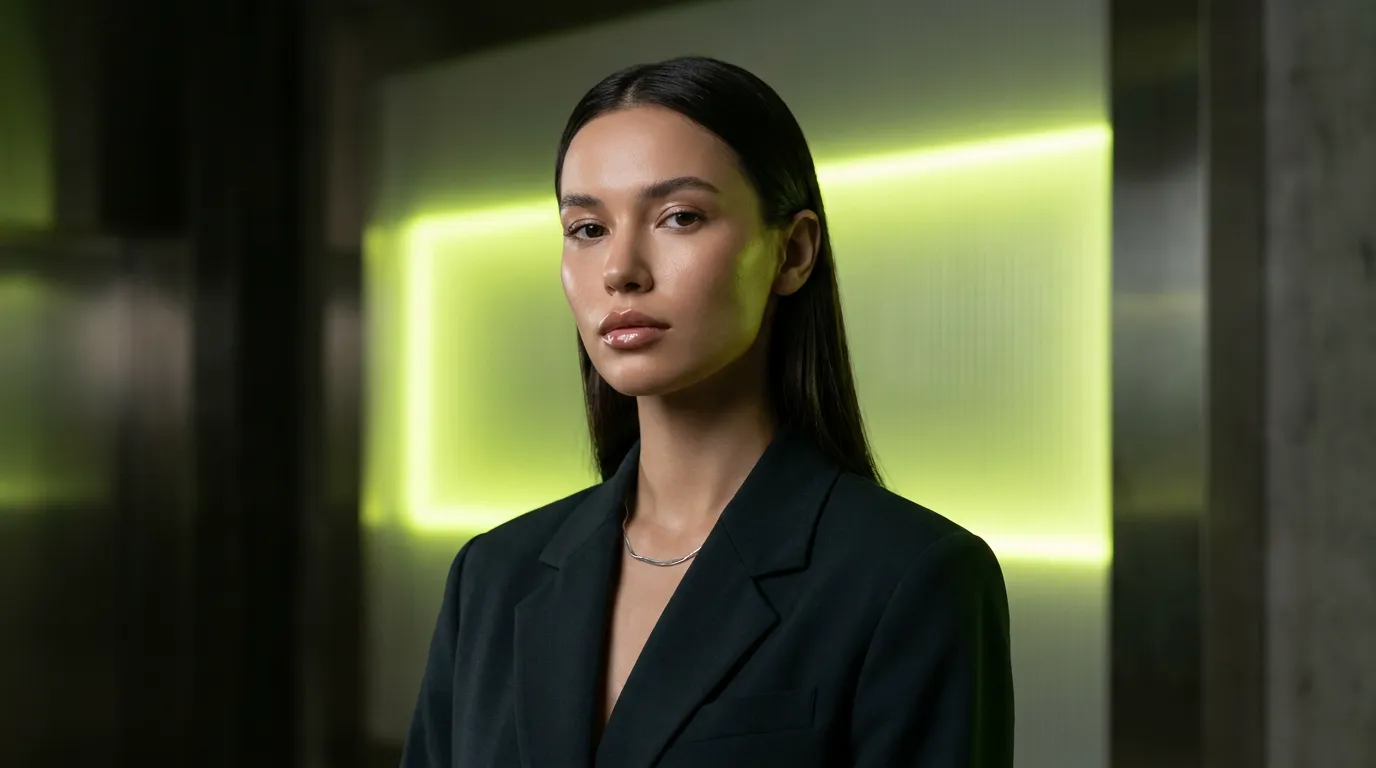
Four ways to make an AI UGC creator
1. From a reference photo
Upload one photo of a face you own the rights to, or generate one. Kreavo keeps that identity when it builds scenes, so the creator in your unboxing video is the same person as in your testimonial video. This is the normal path for a brand that wants a recurring face.
2. From a saved character
Create the character once in the Character studio and reuse it. Every image and video you generate later starts from that character sheet, which is how you get a consistent AI influencer across a whole campaign rather than a new stranger each time.
3. Product first, then video
Composite your real product into the creator's hands as an image, check that the label, shape and colours are right, then animate that frame. Because the video starts from an approved image, the product stays accurate through the clip.
4. Replace the person in an existing clip
Take a video you already have, yours or a stock one, and swap the person for your creator with a video edit model. Motion, camera and lighting stay, the identity changes. Useful when a clip already performs and you need a new face on it.
AI UGC creator, AI influencer, AI avatar: not the same thing
An AI avatar is a fixed talking head: one library face, one lip-synced script, usually a studio background. It reads as an avatar and audiences have learned to scroll past it. An AI UGC creator is built for the opposite effect. Phone framing, a real room, a real product in hand, movement, imperfect light. The face is yours to define and it does not change between videos. An AI influencer is the same creator used over time as a persona, with a name and a feed. The difference in practice: an avatar tool gives you a presenter, a UGC creator gives you a customer.
What makes the face consistent
Consistency does not come from the video model. It comes from starting every generation from the same reference: a photo or a saved character. The image model places that identity into the scene, and the video model animates the result. Change the reference and you change the person; keep it and you keep them. This is why Kreavo generates the image first. It is the cheap step, it is where you check the face and the product, and it is what the video is built from.
Which model to use for a UGC creator
- Hook tests: low-cost clips, such as Wan 3.0 from $0.20. You are judging the first two seconds, not the resolution.
- Talking to camera with a voice and the same face: Seedance 2.5, $1.75 for a 5-second 720p clip, billed per second.
- Product handling, unboxing, turning the item: image-to-video on Kling 3.0 or Wan 2.6, so the product is fixed before motion is added.
- Replacing the person in a clip you already have: Wan 3.0 video edit.
- POV without a face, hands and product only: any model, and the cheapest one is usually enough.
Rules that apply to AI UGC creators
Do not claim the creator is a real customer. Meta and TikTok both allow AI-generated ad creative, and both require that it does not deceive: no fake testimonials attributed to real people, and the AI-generated label where the platform asks for it. Use a face you have the rights to. A generated face is fine; a real person's face needs their permission. Kreavo characters are generated, so the persona is yours to run.
Where a human creator is still the better buy
When you are buying an audience, not a video. A creator with a following brings distribution and a personal history with the product that a generated clip cannot claim. Pay them for that. For the volume work, the twenty variations of a hook, the product demo in five settings, the localized versions, an AI UGC creator does it in minutes for the price of one coffee.
Human UGC creator vs AI UGC creator
Human rates are the published $50 to $500 market range. Kreavo prices are read from the live model catalog at the top-up rate of 1,000 credits for $10.
Real AI UGC creators, made on Kreavo
Public examples from the showcase. Each page shows the exact prompt, the model and what it cost. Nothing is staged for this page.
The showcase is a curated set of real generations from Kreavo accounts, not a demo reel.